
Finding ‘T Oliver’ was for some time quite problematic as every search of the surname Oliver in and around Blandford on genealogy sites became a dead end.
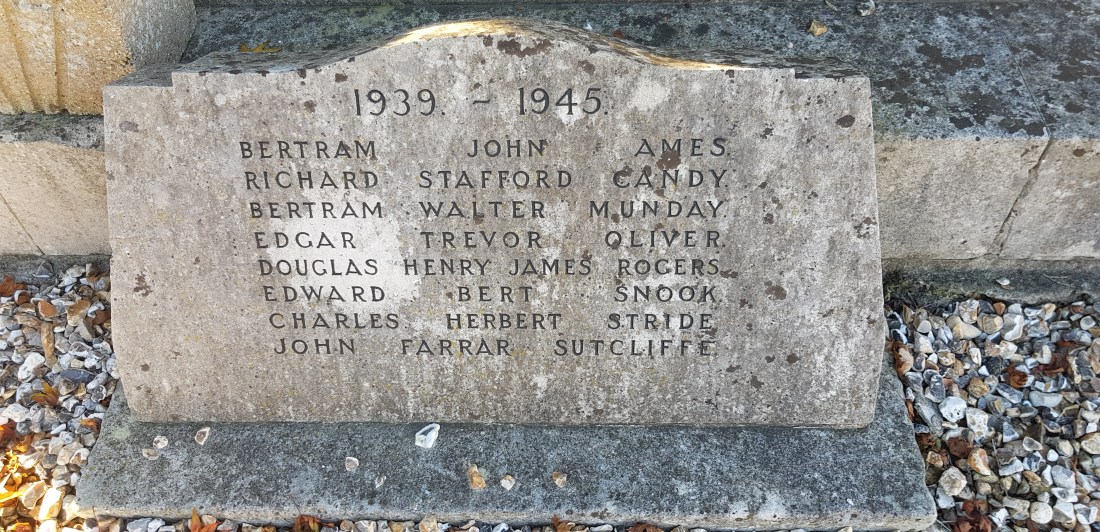
This was until whilst researching Richard Stafford Candy I went to photograph Shillingstone War Memorial. The memorial at The Blandford School only mentions a T Oliver but now I knew I was looking for Edgar Trevor things became a lot easier.
Trevor was born in April 1921 in Midsomer Norton in Somerset, the only child of Albert and Rose Oliver. Albert worked as a Booking Clerk on the Somerset and Dorset Railway. I do not know when the Olivers came to Blandfords, but Trevor is likely to have been at Blandford Secondary School at the time when Mr Greenhalgh retired as headmaster and the governors decided to rename the school ‘Blandford Grammar School’.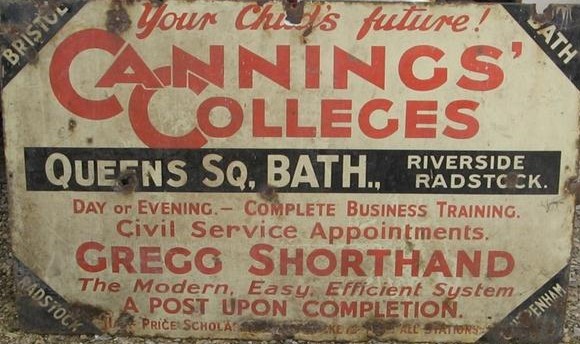
He attended Cannings College in Bath and then went to work at the Horstmann Gear Company in 1938. At the time of the massive expansion of the Territorial Army after Munich, Trevor joined the Royal Engineers in Bath. His original unit, 261 (West Country) Field Park Company RE, was formed in July 1939 under Lt E Anderson as a ‘Second Line Territorial’ Unit. This was part of the ‘doubling’ process when the expansion was based around existing units creating a ‘double’. 43rd (Wessex) Infantry Division created 45th Infantry Division during its collective training in August 1939 at Four Beeches near Exmouth, and 261 were posted to the new division under Maj Gen Frederick Witts, himself a former Royal Engineer.
Trevor was posted to the Middle East in April 1940 to join 4 Engineering Stores Base Depot Royal Engineers as a Clerk.
In early 1941 the North African campaign was not going well for Britain, as after initial successes against the Italians, Germany had sent reinforcements which pushed Allied armies back towards Egypt. On the 10th of April the siege of the strategically important port of Tobruk began. However, as the US general John J Pershing said in WW1, “Infantry wins battles, but logistics wins wars.”
As part of the post WW1 Palestinian Mandate, Britain had developed Haifa during the 1920’s as the major deep-water port at the Eastern end of the Mediterranean in order to provide secure access to oil transported overland by pipeline from Iraq. Haifa’s modern offloading facilities were less than 10 years old by 1941. Stores coming ashore at Haifa would be crucial to gaining the upper hand in North Africa.
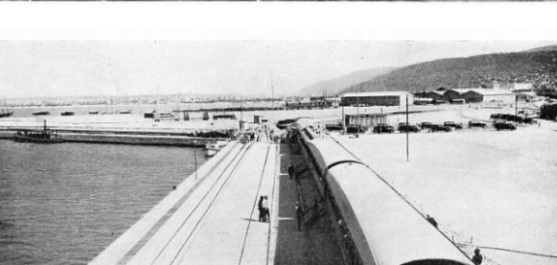 Haifa Port Passenger Terminal in the 1930’s
“J” Engineer Store (Base) Depot Royal Engineers was established in the Haifa Fortress Area on 22 March 1941 and was “intended to include as many Palestinian personnel as possible in the unit” [It is obvious from the Unit War Diary that at the time ‘Palestinian’ meant Jewish Palestinian residents of the area.]
Trevor was transferred from 3 Engineer Store (Base) Depot to “J” Depot three days later.
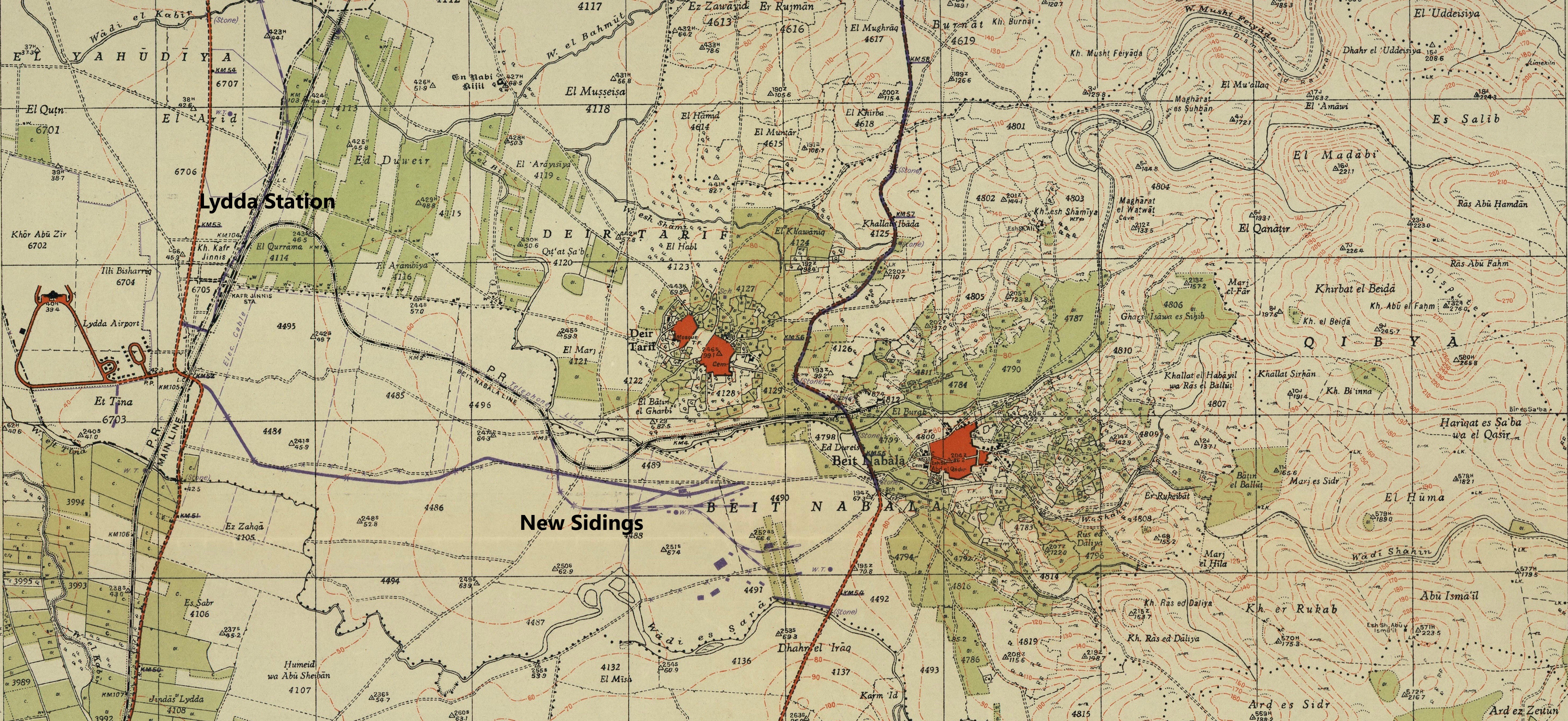
On the 6th May Trevor was detached to help set up a new Engineer Base Stores Depot at the existing British Army base at Beit Nabala, 70 miles south of Haifa towards Jerusalem on the railway route to the front in Egypt. He was attached to No 1 Australian Railway Construction Company. At the time railways were a crucial part of the logistic chain carrying the major proportion of all supplies.
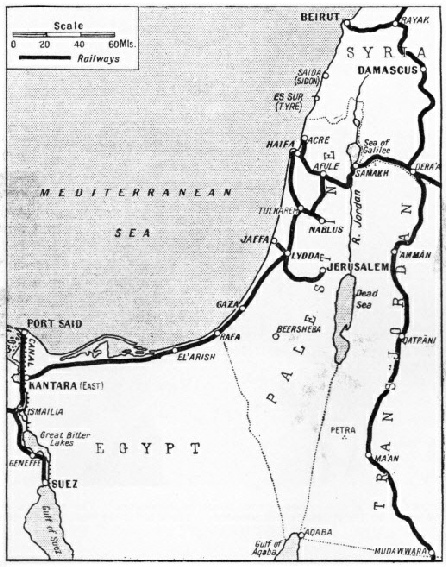 Rail map of lines through Palestine and Egypt
This map from 1942 shows the new railway sidings being built as a purple printed overlay on the original map. These are offshoots from the main railway running south through Lydda. Lydda was a crucial airfield on the Empire Route run by Imperial Airways in the interwar years. Many years later after the establishment of the Israeli state, it became Ben Gurion Airport.
By late June “J” Depot was issuing 350 tons of stores daily, a month later this had risen to 510 tons and by September 768 tons daily.
By the 12 September, “J” Depot was receiving nearly 1400 tons daily.
Trevor had been promoted Corporal on the 1 July 1941 and later that month was granted 10 days leave.
The last time he appears in the unit war diary is when he was admitted to No 62 British General Hospital in Jerusalem with Diphtheria on 21 September 1941 where he died on the 29 September.
As yet I have been unable to locate a portrait photograph.

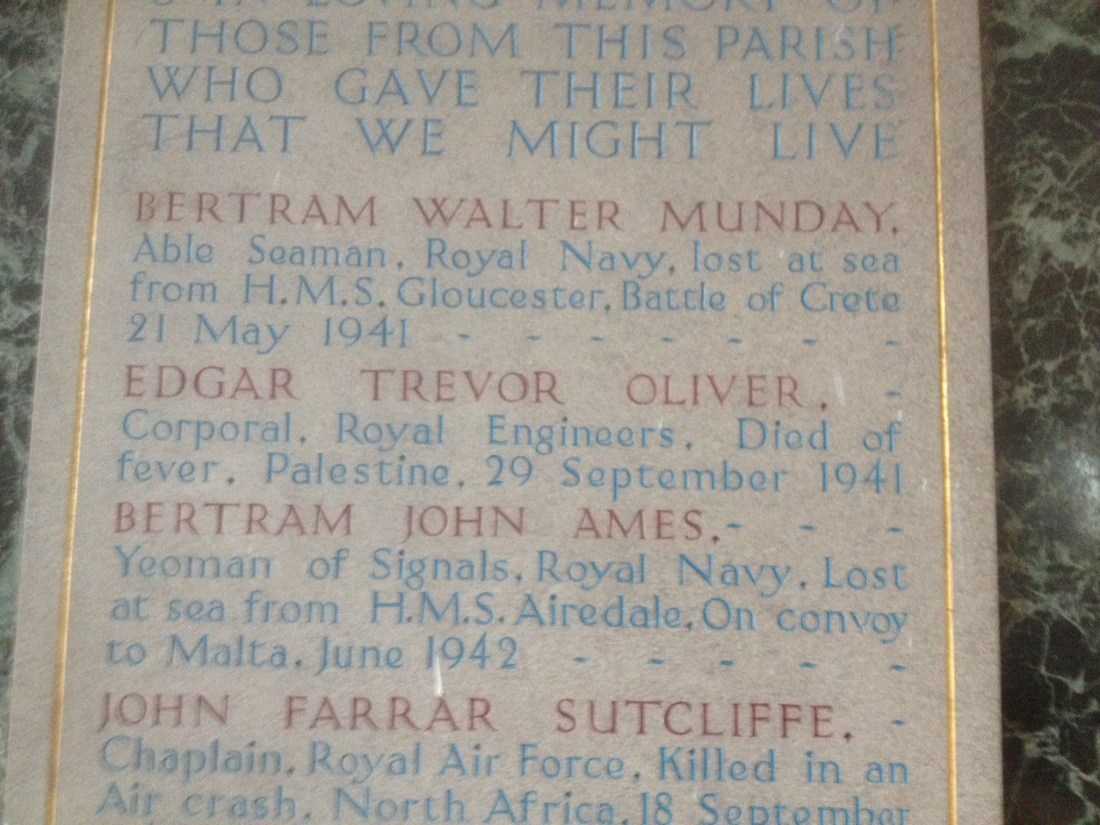
Shillingstone Church memorial
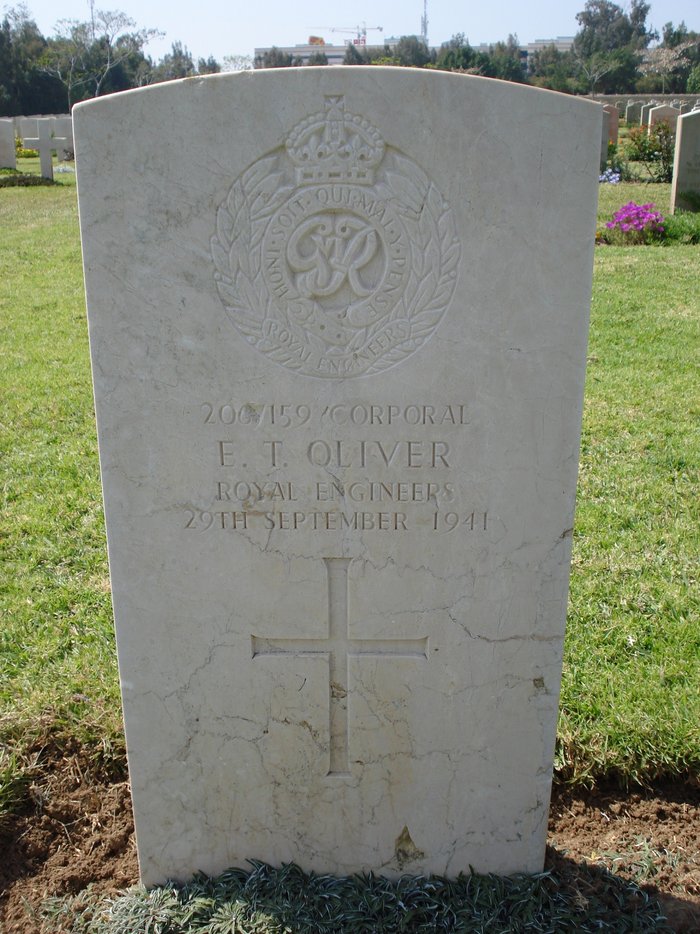
Headstone in Ramleh War Cemetary near Jerusalem, Israel

 Blandford Schools' Combined War Memorials