

Joe Miller was born in November 1914 the younger son of Albert and Amelia Miller who lived at 58 Orchard Street. Albert worked at Hall and Woodhouse brewery as a Steam Engine Driver and Amelia had been an Assistant Elementary School Teacher. Joe’s father had been called up as a reservist with the Dorset Regiment at the time of the Boer War. Joe had an older brother Ted (Albert Edward) who was also at Blandford Secondary School and was a good ¼ miler according to a personal reminiscence on the Dorset OPC site:
Colin Kaile remembers him playing cricket at Shroton, ‘He was a joker with a dry sense of humour, when going up the hill up to Stourpaine he told Johnny New [father of Keith New] who was driving an old Riley, that the car was on fire. “He’s on fire John” – “No he isn’t Joe” – “He b… is”. Just a lot of smoke and a laugh of course.‘
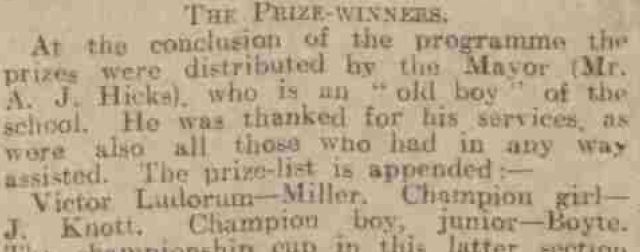
Joe appears to have been quite a sportsman winning ‘Victor Ludorum’ at the June 1930 School Sports Day: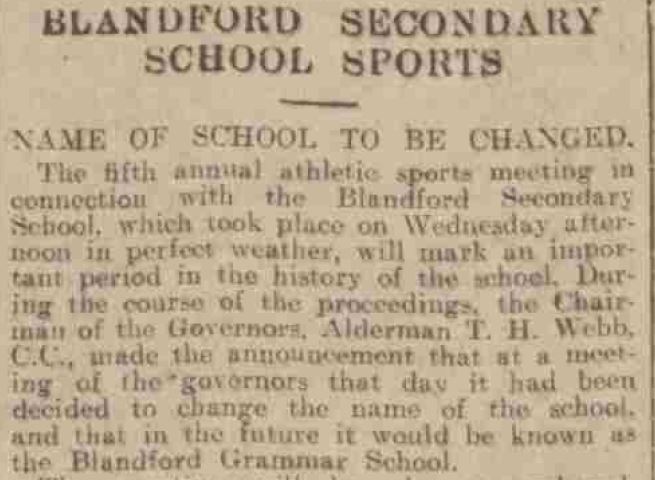
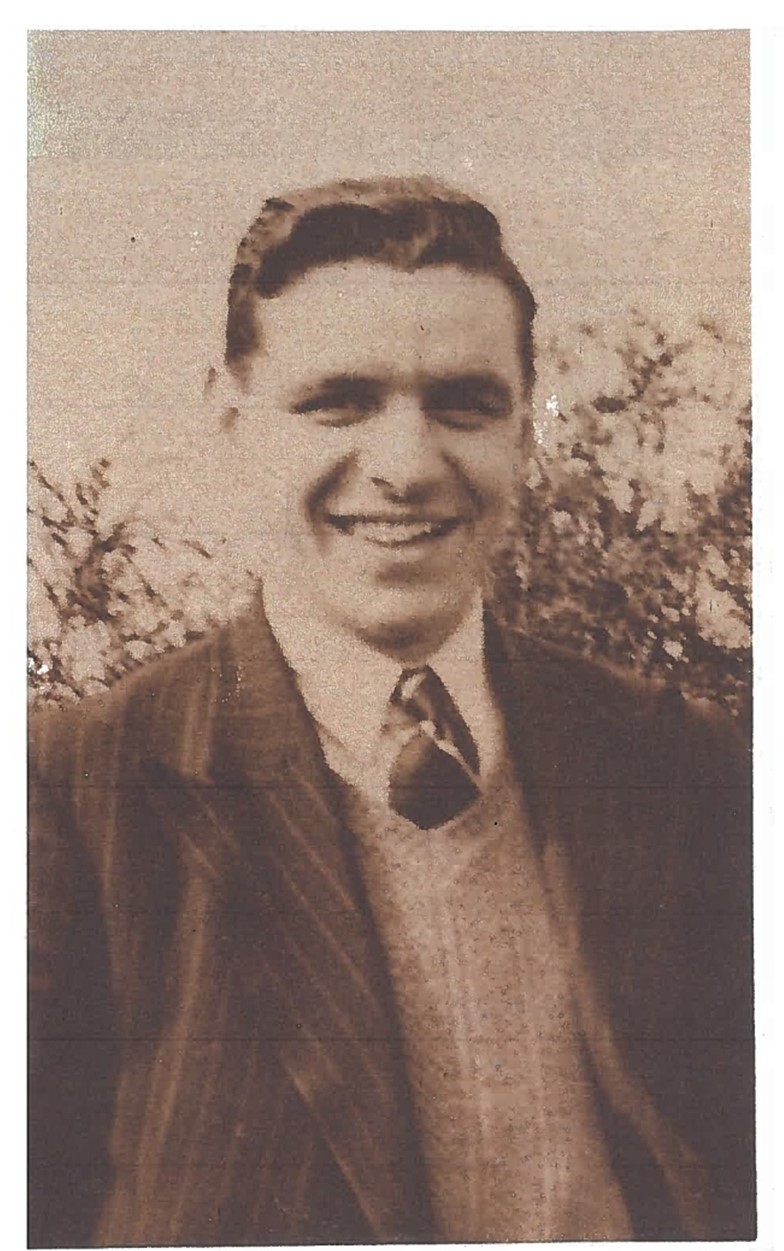

Joe, according to the 1939 Register was an Auctioneer’s Surveyor’s Clerk who went out to auctions at Sturminster Newton. Joe joined the RAF before June 1940 as an F Class reservist. He trained as a Wireless Operator and his first operational posting was to 207 Squadron at RAF Upper Heyford flying twin engined Avro Manchesters. As the Manchester was an underpowered design it was changed to have a bigger wing mounting four engines which became the Avro Lancaster. Joe was involved in the experimental flying of Lancasters at the Royal Aircraft Establishment at Boscombe Down. He was then posted to 44 (Rhodesia) Squadron – so called as in December 1941, 129 of 490 ground crew were Rhodesian.
Joe’s older brother, Ted, was also posted to 44 squadron. The squadron had received its first Avro Lancaster, BT308, in late 1941 and became the first squadron to convert completely to Lancasters – flying their first operational missions in the aircraft on 3 March 1942.
On one mission flown from RAF Waddington to Karlsruhe, Joe’s Lancaster had to put down at RAF North Luffenham where, as was standard practice for all returning bomber crews, he was interviewed by the Intelligence Officer. Except on this occasion the Intelligence Officer was Francis Chappell who had been Joe’s Maths teacher at Blandford Grammar School. He and Joe immediately recognised each other. Francis survived the war and emigrated to Australia in the late 1940’s and died in Tasmania in 1999.
Away from flying, Joe played both Hockey and Cricket for 44 Squadron and became engaged to Mary Wort, a tailoress, from Alexandra Street in Blandford in October 1941. Joe’s brother Ted married Violet Pettefer in August 1940 but sadly Joe and Mary were unable to marry before he died.
Flying in Lancasters, Joe was part of an experienced crew having flown more than 30 missions over Europe at the time of his death. Eventually 44 squadron suffered the third highest overall casualties of RAF Bomber Command.
Wing Commander P.W. Lynch-Blosse took command of 44 Squadron on the 8th May 1942. That night he led seven 44 Squadron Lancasters, part of a total force of 198 aircraft, on a raid on the Heinkel factory at Warnemunde. They found the target heavily defended with search lights and flak. Nineteen aircraft were lost on the raid, including four from 44 Squadron, including the new CO.
193 aircraft attacked the town, described by German radio as a ‘bathing resort’ it was also an important transport hub for transporting equipment to the Northern Russian front and German forces in Norway by sea. It hosted a Naval Training Centre for both U-Boat and E-Boat crews, the Arado Flugzeugwerke aircraft factory and a subsidiary plant to Rostock’s Heinkel aircraft factory.
The force consisted of
- 98 Wellingtons,
- 27 Stirlings,
- 21 Lancasters,
- 19 Halifaxes,
- 19 Hampdens,
- 9 Manchesters
19 aircraft were lost:
- 8 Wellingtons,
- 4 Lancasters,
- 3 Hampdens,
- 2 Halifaxes,
- 1 Manchester,
- 1 Stirling
No details are available from the defence at Warnemunde but Bomber Command’s own records say ‘the attack was only moderately successful’. The target was heavily defended, mainly by light Anti Aircraft Artillery. The concentration of searchlights was one of the densest yet encountered – with many lights inclined at a low angle in an attempt to hide the port and factory under a dazzle of lights.
The others in Joe’s crew of R5557 KM-G that night were:
741380 WO Peter Owen Jones (Pilot)
929941 Sgt Leonard Edward Evans (Co-Pilot) flying his first mission
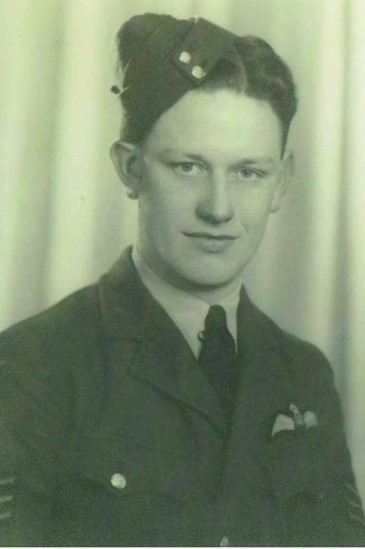
Leonard Evans
924143 Sgt John Charles Drennan (Flight engineer)
J/7523 Plt Off Mado Henry Donald MacDonald RCAF (Navigator) Pilot Officer MacDonald was an American citizen who had “crossed the border” and enlisted in the RCAF (Royal Canadian Air Force), He was originally from California, USA.
905398 Flt Sgt Patrick Herbert Harold Thirkell DFM (Air Bomber)
646924 Flt Sgt Charles Harry Ship (Air Gunner)
628559 Flt Sgt Arthur Herbert Bolus (Air Gunner)
It is believed that R5557 was hit on the way to Warnemunde and crashed somewhere in the North Sea with everybody on board lost.


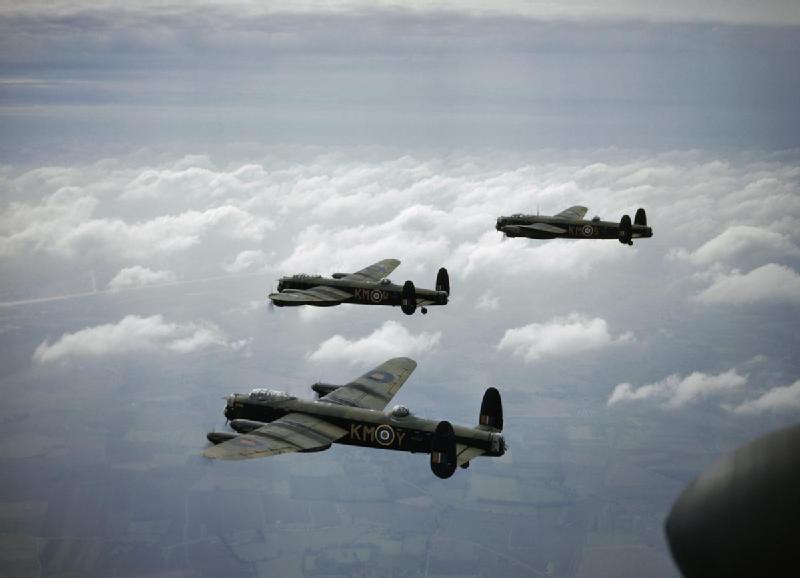
As well as being commemorated on the Blandford School Memorial, Joe’s name appears on the Corn Market memorial as well as the Runnymede memorial for missing Aircrew.

Joe’s name was added to his father’s grave in Blandford cemetery which was looked after by his one time fiancée, Mary and now by Mary’s daughter.
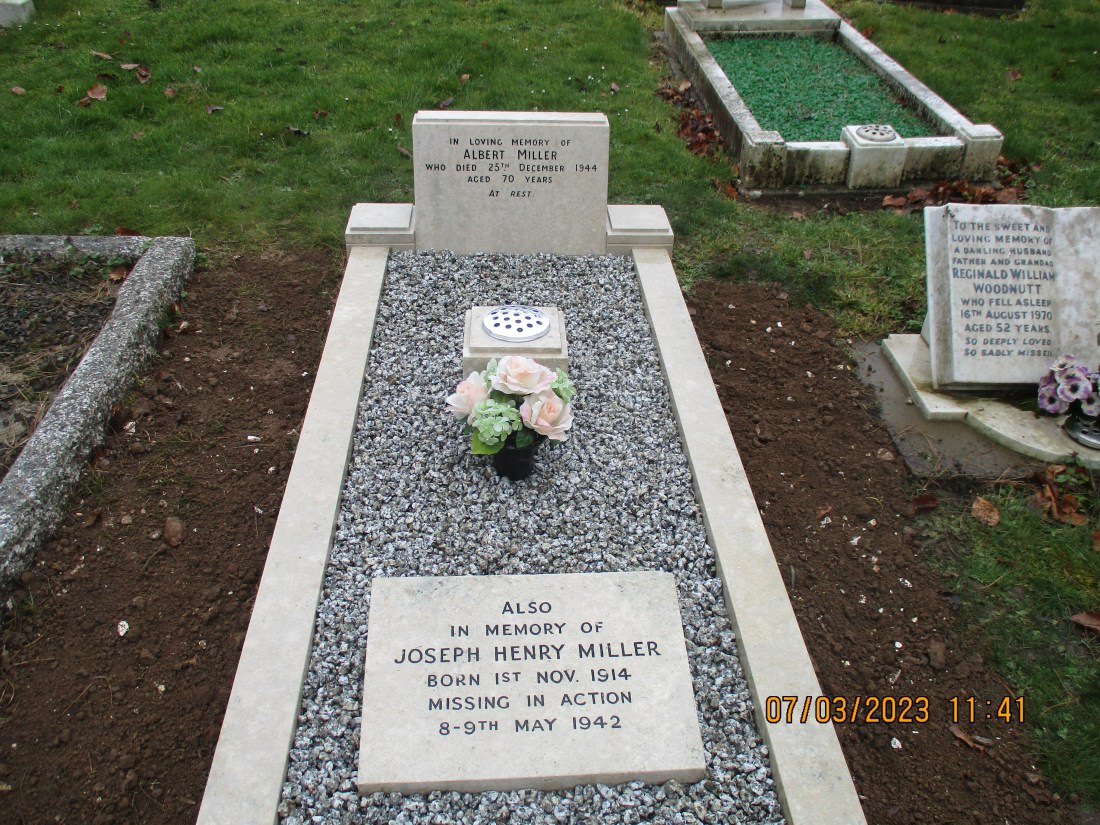
Miller family plot Blandford cemetery
When Albert Miller’s headstone was cleaned in early 2023 a separate memorial headstone was erected for Joe in Blandford cemetery:
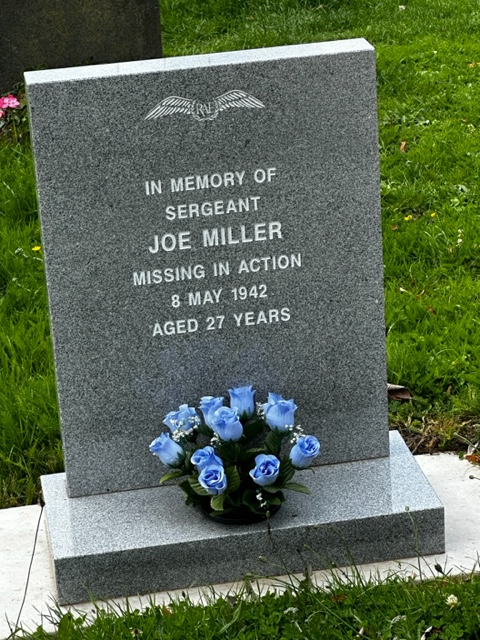
New headstone Blandford cemetery
 Blandford Schools' Combined War Memorials